Alert#
 1EventID :               119
 2Event Time :            Feb, 28, 2022, 10:48 PM
 3Rule :                  SOC169 - Possible IDOR Attack Detected
 4Level :                 Security Analyst
 5Hostname :              WebServer1005
 6Destination IP Address: 172.16.17.15
 7Source IP Address :     134.209.118.137
 8HTTP Request Method :   POST
 9Requested URL :         https://172.16.17.15/get_user_info/
10User-Agent :            Mozilla/4.0 (compatible; MSIE 6.0; Windows NT 5.1; .NET CLR 1.1.4322)
11Alert Trigger Reason :  consecutive requests to the same page
12Device Action : AllowedIdentification#
Is the traffic coming from outside?#
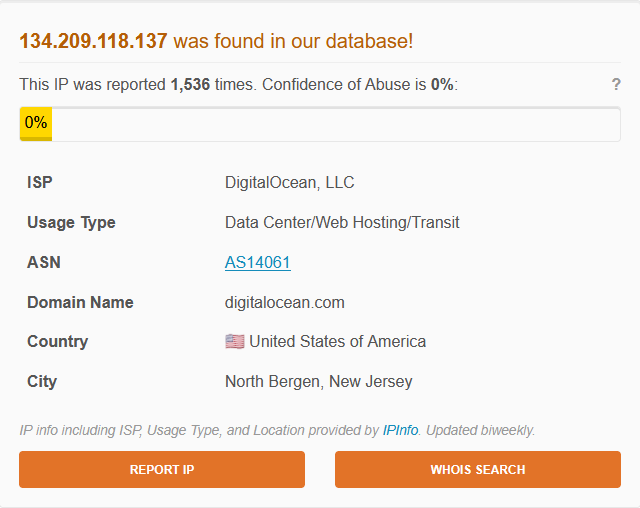
The source IP 134.209.118.137 is an external address belonging to DigitalOcean LLC (AS14061), located in North Bergen, New Jersey. The destination 172.16.17.15 is an internal address. The traffic is inbound from outside the network.
Is the source malicious?#
AbuseIPDB reported the IP 1,536 times with a confidence of abuse of 0%, indicating it is a known DigitalOcean hosting address with no confirmed malicious history.
VirusTotal returned 0/94 detections — no security vendor flagged the IP as malicious.
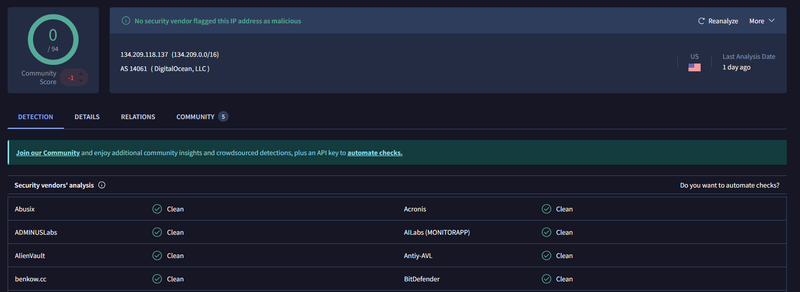
Although both sources return clean results, the IP belongs to a cloud hosting provider, which is commonly used to launch attacks anonymously. The repetitive request pattern is the primary indicator here.
What type of attack was attempted?#
Firewall logs show five consecutive inbound connections from 134.209.118.137 to 172.16.17.15:443 between 10:45 PM and 10:48 PM, all on different source ports, where each request contained a unique parameter: ?user_id=1, ?user_id=2, ?user_id=3, ?user_id=4, and ?user_id=5.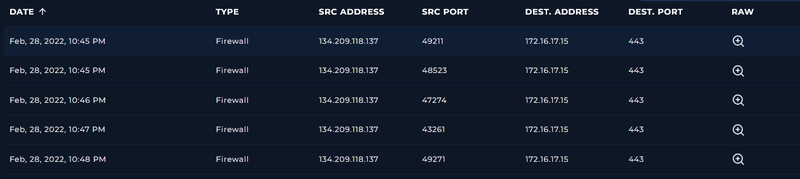
1Request URL: https://172.16.17.15/get_user_info/
2User-Agent: Mozilla/4.0 (compatible; MSIE 6.0; Windows NT 5.1; .NET CLR 1.1.4322)
3Request Method: POST
4Device Action: Permitted
5HTTP Response Size: 253
6HTTP Response Status: 200
7POST Parameters: ?user_id=2Insecure Direct Object Reference (IDOR) is an access control vulnerability where an attacker manipulates object references - such as user IDs in a URL or request body - to access data belonging to other users. The endpoint /get_user_info/ is a target for this type of enumeration. The consecutive POST requests from a single external IP suggest the attacker was iterating through user identifiers to extract account data without authorization.
Did anyone else get targeted?#
All connections targeted the same destination - only 172.16.17.15 was affected.
Did the attack succeed?#
I examined the HTTP response data for each of the five requests. All five requests returned HTTP 200 with differing response body sizes. I concluded the attack succeeded and that data for all five queried accounts was exfiltrated.
Triage Decision#
True Positive. An external cloud IP sent repeated automated POST requests to a user data endpoint. The firewall allowed all traffic and the endpoint was exposed. The attack pattern is consistent with IDOR enumeration.
What is the impact level?#
High. If the /get_user_info/ endpoint does not enforce proper authorization checks, the attacker may have successfully retrieved account data for multiple users. The endpoint handles user information and was accessible without restriction from an external IP.
Containment#
Is the attacker still active?#
The last logged connection was at 10:48 PM on Feb 28, 2022. No additional logs were observed after this timestamp. The attacker may have completed the enumeration or moved on, but the IP has not been blocked.
Is the vulnerable endpoint still exposed?#
Yes. The /get_user_info/ endpoint remains accessible from external IPs with no firewall restriction in place.
Actions taken#
134.209.118.137 was blocked at the firewall level. The /get_user_info/ endpoint was flagged for the application security team.
IOCs#
| Type | Value | Source |
|---|---|---|
| IP | 134.209.118[.]137 | Firewall logs |
| URL | hxxps://172.16.17[.]15/get_user_info/ | Alert |
| User-Agent | Mozilla/4.0 (compatible; MSIE 6.0; Windows NT 5.1; .NET CLR 1.1.4322) | Alert |